Header overlay

What excellent company you are!

I have been devoted to your podcast for over a year; it could be improved only by being more frequent. Every book I have ordered from you has been a delight; nothing disappoints. I receive your emails with pleasure, and that’s saying a lot. Slightly Foxed is a source of content . . .
K. Nichols, Washington, USA

Popular categories

Explore our library

1st March 2007

Slightly Foxed Issue 13: From the Editors

Emerging from the miasma of winter colds and flu that hung over the office – even Pugwash was under the weather – we were immensely cheered by the splendid selection of Christmas cards you sent us, many of them fox-related. We enjoy all your letters and postcards too. Thank you so much. We’ve said it before, and we’ll say it again: our contact with you, our subscribers, is one of the great pleasures of life at Slightly Foxed.
- Gail Pirkis & Hazel Wood
From the editors
A Prisoner of Her Time

A Prisoner of Her Time

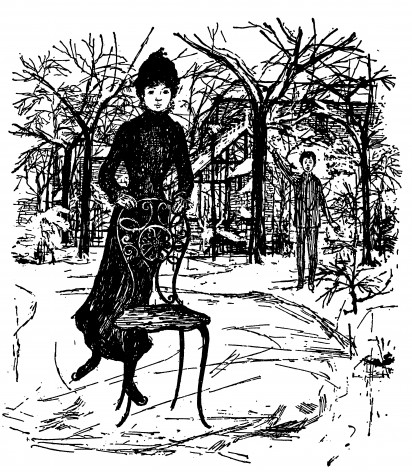
Why wasn’t Charles Dickens knighted, assuming he wasn’t offered the honour and declined it, as some authorities believe? Would it have been because he spilled so much ink lambasting the establishment? I think not. He was too colossal a figure for that to be an obstacle, even in Victorian England. Was it – as you will discover if you read Claire Tomalin’s masterly biography The Invisible Woman – because he kept a mistress, the actress Ellen (Nelly) Ternan? Highly unlikely, since, as you will also discover, he handled that business with the combination of psychotic secretiveness and extreme canniness that one would expect from such a man.
SF magazine subscribers only

The King’s Spaniel

I have no idea on what my father based this and I’m sure he was genuinely trying to console, but for years afterwards I avoided novels that mixed politics and facts, particularly historical novels. Writers should just make it up, I thought. Feelings were what counted: feelings, ideas, characters and story. But then, thankfully, I was given Rose Tremain’s best-selling and Booker short-listed novel Restoration, and, plunging in against my better judgement, was immediately hooked.
SF magazine subscribers only

Scourge of the Suburbs

‘Rice Mould’ is a story written in 1919 for Home Magazine, a periodical aimed at women of the suburban middle class. A party is in progress at the Browns’ villa somewhere to the south of London. While the grown-ups get ready to dance to the gramophone in the library, the youngest child, William, a spirited, muddy-kneed, tufty-haired 11-year-old, is trying to smuggle one of Cook’s best cream blancmanges in a dirty soap-dish to the girl next door. It does not go well.
SF magazine subscribers only
When the Clock Struck Thirteen

When the Clock Struck Thirteen

A lot of the stories I loved most as a child involved doors. Aged about 4, I suppose, I passed through the small, latched door in the hillside, into Mrs Tiggywinkle’s flagged kitchen, filled with the ‘nice, hot, singey smell’ of ironing, busy and reassuring. A few years later came the doors into Narnia, the Secret Garden and Wonderland, Bilbo Baggins’s ‘perfectly round’ green door with its shiny yellow brass knob ‘in the exact middle’, the door into the Yellow Dwarf ’s home in the orange tree, and the dark door into Bluebeard’s bloody chamber . . . But reading to my own children, the door I’ve been happiest to pass through again is the door into Tom’s Midnight Garden – a door one can only imagine because, unlike most of the others, it is never described.
SF magazine subscribers only

Feeling A Little Wembley

In the 1960s, at a time when I took myself more seriously, I went to work for the Observer in what I mistakenly believed was a rather important position. One afternoon, soon after my arrival, a stranger walked into the office I shared with two other people. He was neat, quite short and stocky, and, I seem to remember, he wore a pale tweed jacket. He had a pleasant light tenor voice and the air, perhaps, of a popular geography master at a prep school.
SF magazine subscribers only
Vanishing Point

Vanishing Point

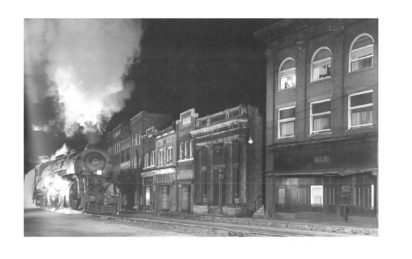
Think of an Edward Hopper picture, Main Street, Anywheresville, USA, a warm summer’s evening. Geometric buildings, neat and desolate. Give them names: Northfork Drug; The Hub Men’s Clothing; First Clark National Bank; Dr J. P. Wade, Physician, Walk In. Remove Hopper’s colours, see it in black-and-white. In an open window a table-lamp illumines a man’s face. He’s the only human visible. The scene is empty, and you might be hearing utter silence if it weren’t for a huge steam locomotive dragging a freight train down the track that runs along the middle of the street. The locomotive’s as tall as a house, its headlight and its white smoke piercing the dark. No engineer, no fireman visible. A ghost train driving itself.
SF magazine subscribers only
Building Blocks

Building Blocks

The idea of telling a story based on a construction project has been with us since the Book of Genesis, but the method chosen to tell the tale imparted in The Honeywood File, and its sequel The Honeywood Settlement, is by far the most effective and entertaining way I know of describing a process that is at once collaborative and confrontational. Written by H. B. Cresswell, himself a practising architect, The Honeywood File and its successor began life as a series of weekly articles that appeared in the Architects’ Journal between 1925 and 1927, whence they soon gathered enough of a following to be collected and published as books in 1929 and 1930.
SF magazine subscribers only

The Supreme Diarist?

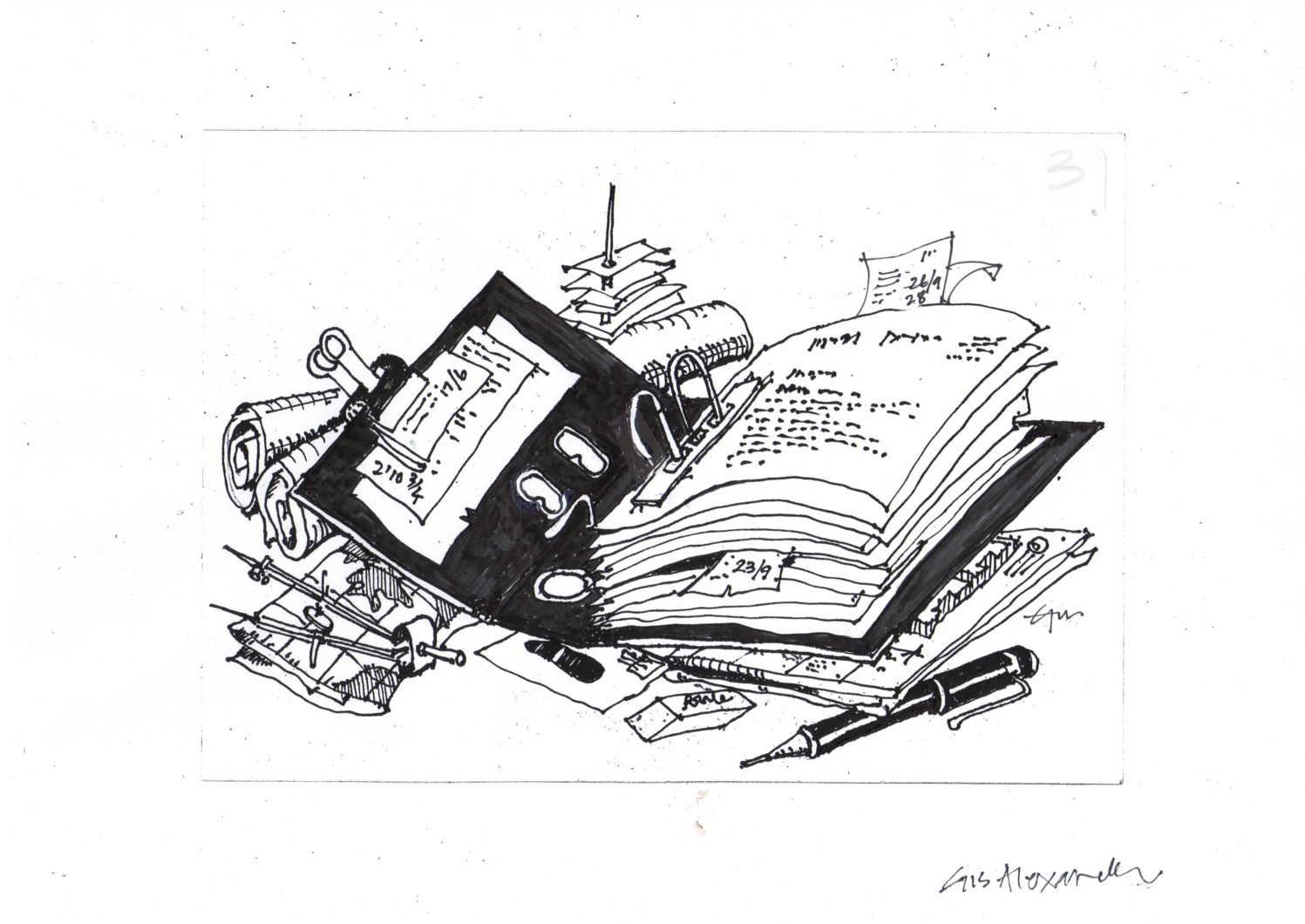
Though he had died in 1947 I had many of his books of collected theatre criticism, from Buzz Buzz (1914) through Brief Chronicles (1943) to the wonderful evocation of musicals and light comedies, Immoment Toys (1945). It was some time, however, before I came across Ego, his diary, the first volume of which came out in 1932. In the first entry, he says that he started writing it ‘because there seem to be a lot of things I want to say that other writers put into novels and accepted essayists into essays. Because it will be a relief to set down just what I do actually think, and in the first words to hand, instead of pondering what I ought to think and worrying about the words in which to express the hammered-out thought.’ Rebecca West claimed that she would ‘keep these journals as I keep the Goncourt Journals, as records of their time more truly historical than history’, while in an obituary broadcast Alistair Cooke called Agate ‘the supreme diarist’.
SF magazine subscribers only

Pox Britannica

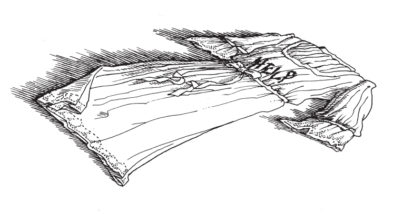
In November 1922, George Orwell (or Eric Blair, as he was then) arrived in Burma, to take up a post with the Indian Imperial Police. He was 19, not long out of Eton, which he had attended on a scholarship; his family could not afford to send him to university. He moved about: from hill station to frontier outpost, to the outskirts of Rangoon, eventually posted to the town of Katha, in Upper Burma. It was on this remote place that he based the town of Kyauktada, the setting for his first novel, Burmese Days. It was published in New York by Harper & Brothers in 1934, and then, in 1935, in London, by Victor Gollancz, who had – needlessly – been afraid of libel.
SF magazine subscribers only

Sign up to our e-newsletter

Sign up for dispatches about new issues, books and podcast episodes, highlights from the archive, events, special offers and giveaways.