
Header overlay

What excellent company you are!

I have been devoted to your podcast for over a year; it could be improved only by being more frequent. Every book I have ordered from you has been a delight; nothing disappoints. I receive your emails with pleasure, and that’s saying a lot. Slightly Foxed is a source of content . . .
K. Nichols, Washington, USA

Popular categories

Explore our library

Talking to the Major

Talking to the Major

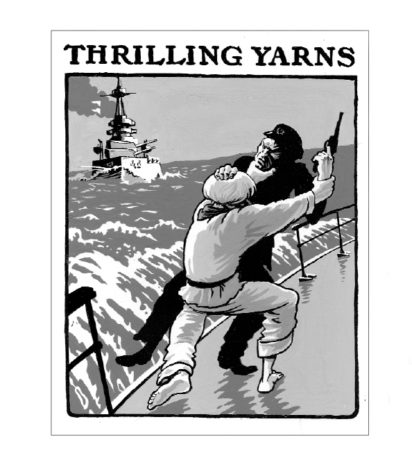
Percy F. Westerman (1876–1959) was one of the most popular writers of boys’ adventure stories from the 1920s to the 1950s. In their brightly coloured dust-jackets his historical tales – books about the Great War or the early days of aviation – sold in their thousands, and in the Thirties he was acclaimed as the most popular boys’ author in a referendum run by the Daily Sketch. By the time he died he had written nearly 200 books, which had been translated into many languages, and achieved sales of one and a half million copies. Many readers of Slightly Foxed will remember the excitement they felt when they first encountered the exploits of Standish, the flying detective, in such tales as The Amir’s Ruby (1932) or Standish Gets His Man (1938).
SF magazine subscribers only
In Italy’s Dark Heart

In Italy’s Dark Heart

On a motorbike ride across southern Italy in the Sixties, I stopped at an outdoor café in a hilltop village somewhere in the middle of Basilicata. A group of men and boys gathered a few yards away and, with that unnerving look of blank curiosity and suppressed hostility which you sometimes encounter in peasant areas, watched in silence while I drank my coffee. My discomfort ended only when they turned to inspect the much more interesting English motorcycle, a big old 350cc BSA. One of the boys mumbled a comment, and the ice was broken.
SF magazine subscribers only
The Man in the Lavender Suit

The Man in the Lavender Suit

I’ve always thought journals and letters among the best of bedside books. The entries, for one thing, are just long enough, usually, to end as drowsiness begins to be irresistible. I first came across one of Horace Walpole’s letters in an anthology, and thought it was as entertaining as one of Byron’s. I looked out more of them; they too were as entertaining as Byron’s – maybe even more so. I had recently given up buying, volume by volume as they came out, the great Murray edition of Byron’s letters, on the grounds that they had become too expensive; a decision I now regret with inexpressible bitterness. But maybe there was an affordable collected edition of Walpole’s.
SF magazine subscribers only
1st December 2005

Slightly Foxed Issue 8: From the Editors

It’s Christmas again – our second, which seems cause for celebration in itself, especially as subscriptions are holding steady and even (dare we say it) creeping up. We raise a celebratory glass both to those of you who have stuck with us, as the publisher Anthony Blond once said, through thin and thin, and to those of you who have come on board more recently. Thank you for all your letters of appreciation and encouragement. Slightly Foxed subscribers do seem a most convivial group of people – humorous, enthusiastic, impatient of pomposity, and with a telling, even poetic, turn of phrase (‘Ten minutes ago, out of the Atlantic wind, came the postman carrying Slightly Foxed ’ begins a recent e-mail from a subscriber in Donegal).
- Gail Pirkis & Hazel Wood
From the editors

Down and Out in Havana

I knew what I wanted, and I went to Havana to find it. It was the university summer holidays. England was one long yawn, with its slow drizzle and its Third Way, the flat vowels of its politicians and their deadly practical aspirations of stability and prosperity. I’d spent two years sitting in the library reading about faraway, long-ago revolutions, grinding my teeth at the dullness of my life. I sat there absorbing other people’s pontifications so I could go off and pontificate myself, so I could order and organize a world I hadn’t yet really discovered. I wanted to find a place where people were actually living, where they were sweating and dancing and dying and having sex; a place, in fact, like that in Pedro Juan Gutiérrez’s Dirty Havana Trilogy.
SF magazine subscribers only

Flashman’s Nemesis

In Slightly Foxed No.33, Andrew Nixon paid homage to George MacDonald Fraser’s splendid creation, the appalling Flashman; and Patrick Mercer, himself an infantryman, drew attention to Quartered Safe Out Here, Fraser’s autobiographical account of his own service as an Other Rank in the Border Regiment. But both omitted mention of Fraser’s other marvellous creation, the infamous Private McAuslan, the dirtiest soldier ever to grace the tartan of a Highland regiment.
SF magazine subscribers only

Adventures in Achromatopsia

The Island of the Colour-blind was given to me by a friend who was himself red-green colour-blind. This discovery, early in our relationship, illuminated several of his quirks: a terrible dress sense, a preference for Dürer engravings over Impressionist sunsets, a comment made on an early date that our shirts ‘matched’ (I was in damson, he was in scarlet – the two shades of red clashed horribly). As a biologist, I thought I knew about colour-blindness, but this wonderfully weird book gave me a whole new perspective on the phenomenon.
SF magazine subscribers only
Putting the Hum into the Humdrum

Putting the Hum into the Humdrum

I first encountered John Hegley in the early ’90s, though only obliquely, via a schoolfriend who was hipper than me and had one of John’s early pamphlets. He showed me a limerick about ‘a creature from space/who entered a three-legged race/he was not very fast/in fact he came last/because he was a bag of oven-ready chips’. It may not look like much on the page, but it has three important things going for it: it’s silly; it’s short; and it makes full use of the last line, adding an extra foot to give the surprise a bigger kick.
SF magazine subscribers only
Neither a Borrower . . . ?

Neither a Borrower . . . ?

Every year the registrar of Public Lending Right issues a report on the authors whose books have been most often borrowed from libraries. You can be sure these days that Danielle Steel, Josephine Cox and James Patterson will be up there with the leaders, but it might be more interesting, I think, to discover the name of the author whose books we borrow most often from each other. We need more information about these delicate transactions between friends. I’d also like to know the title of the book which is most often borrowed and never returned, and I’d be disappointed to learn that it was something like A Sensible Guide to Home Plumbing or The Grouter’s Friend . . .
SF magazine subscribers only

A World of Words

Whether by luck or judgement I don’t now remember, but I first came across the work of Amos Oz in 1984. The occasion was my sole visit to Israel, when I needed a contemporary guide, my only other literary encounter with Jewish culture having been three historical novels by Isaac Bashevis Singer. Somewhere between Singer’s nineteenth-century Poland and Oz’s modern stories came the horrors of the Nazi era: the bit of Jewish history that everyone knows and that is built into everyone’s idea of the state of Israel. It was in my mind at the time, not least because the parents of our Israeli friend bore the tattoos of the concentration camp on their forearms.
SF magazine subscribers only
The Sound of Youth

The Sound of Youth

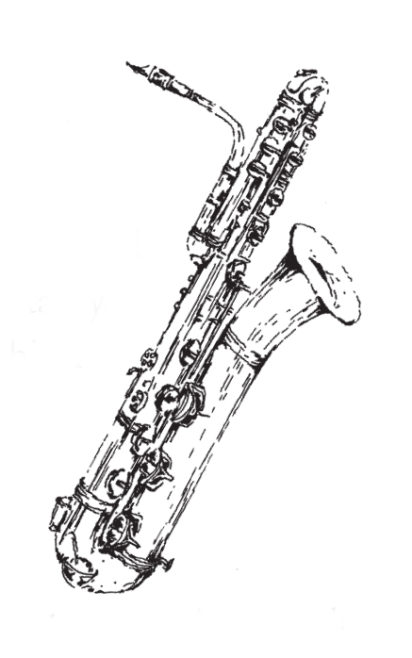
It’s odd to recall that until the rock and pop revolution of the early Sixties, most British towns had at least one band, usually consisting of a trumpet and trombone, drummer, bass player and out-of-tune pianist thumping out rough versions of New Orleans and Dixieland jazz to young audiences in the back rooms of pubs. This was good drinking and jiving music, although as a young smart alec in those days I snobbishly preferred modern jazz. However, in no forms of jazz did I ever see anyone playing the bass saxophone, the instrument celebrated in Josef Škvorecký’s wonderful novella The Bass Saxophone.
SF magazine subscribers only

Dreaming of the Bosphorus

My father Irfan Orga (1908–70) first set foot in England in July 1942, as a staff captain commanding Turkish Air Force pilots completing their training with the RAF. The posting changed his life. In London, challenging the Turkish law of the day forbidding members of the armed forces or diplomatic service from cohabiting with foreign nationals, he took up with a young, irregularly beautiful Norman-Irish lapsed Catholic, Margaret, then married to someone else. She assumed his surname in 1944, seven months before I was born.
SF magazine subscribers only

Sign up to our e-newsletter

Sign up for dispatches about new issues, books and podcast episodes, highlights from the archive, events, special offers and giveaways.