Header overlay

What excellent company you are!

I have been devoted to your podcast for over a year; it could be improved only by being more frequent. Every book I have ordered from you has been a delight; nothing disappoints. I receive your emails with pleasure, and that’s saying a lot. Slightly Foxed is a source of content . . .
K. Nichols, Washington, USA

Popular categories

Explore our library

Mother’s Familiar

My parents had no interest in books. Having survived the Second World War, they found everything they needed in each other, and in their north London suburban home with doors they could lock, in a location free from falling bombs. For my father, it was ‘real life’ that mattered, so the daily and evening newspapers were sufficient; and my mother, as ever, deferred to him. They possessed between them a couple of telephone directories, an ancient Thorndike dictionary used by my father for his daily crossword, and the Radio Times, which my mother insisted on calling ‘the television book’, and that was it. Or so I thought.
SF magazine subscribers only
Along the Old Ways

Along the Old Ways

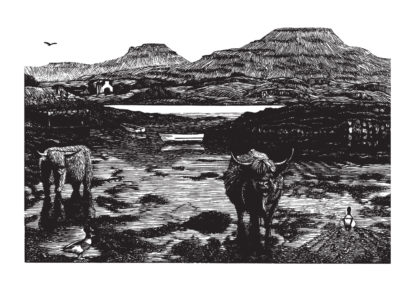
For many years of my life, I was fascinated by mountains and their tops: drawn upwards by what Joe Simpson nicely calls ‘the inverted gravity’ that peaks exert upon certain people. I climbed and mountaineered – ineptly but passionately – in ranges around the world: Snowdonia, the Lake District, the Cuillins, the Cairngorms, the Alps, the Rockies, the Tian Shan, the Himalayas. All of these expeditions, from half-day to multi  month, were centred upon summits. My companions and I would scry our maps, mark the tops we wished to reach, then plan our journeys around those high points. It did not occur to me to explore a mountain without reference to its peak.
SF magazine subscribers only
Not Swinging, Just Dancing

Not Swinging, Just Dancing

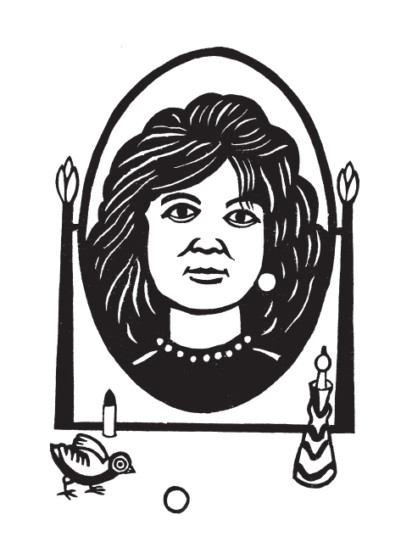
With my first wage, earned by selling toys in a department store, I bought myself a pair of black stockings, a bottle of frosted pink nail varnish, and a copy of Edna O’Brien’s The Country Girls. My family believed books were ‘good for you’ and I’d gobbled up the classics: Dickens, the Brontës, Thackeray, Gaskell and Defoe, coping happily with long convoluted sentences and dutifully deploying them in my school essays. O’Brien’s brilliantly concise sentences were a revelation, her voice fresh and direct.
SF magazine subscribers only

Living in Interesting Times

I don’t suppose anyone really understands why some novelists, widely read, even celebrated, are eclipsed when they die. Why is R. C. Hutchinson (1907–75) now almost forgotten? The Unforgotten Prisoner (1933), his third novel and first success, sold 150,000 copies in the month of publication. Rising, his last novel, the final chapter unfinished when he died, was short-listed for the Booker Prize in 1975. It isn’t that publishers haven’t tried. Allison & Busby republished several of the novels as ‘modern classics’ in the 1980s and 1990s. Testament (1938) and The Unforgotten Prisoner were reissued as King Penguins in 1981 and 1983. And now Faber have reissued five of the novels as Faber Finds: The Unforgotten Prisoner, Testament, Recollection of a Journey (1952), A Child Possessed (1964) and Rising.
SF magazine subscribers only
The Art of Browsing

The Art of Browsing

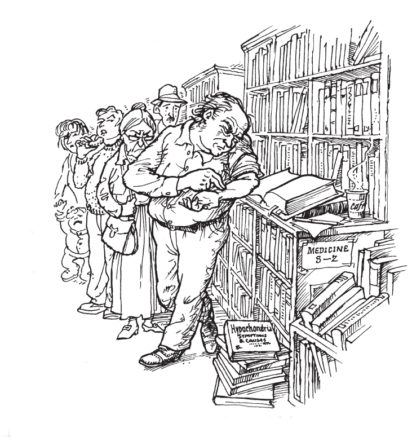
It is time to reclaim the verb ‘to browse’. Its proper meaning is ‘to linger in a bookshop, sampling the volumes on display’. These days the word is too often appropriated by Internet addicts and goats. When we sit at our keyboards and trawl through websites the correct verb should be ‘to gawp’. And when goats, with their insolent expressions, tear at sparse vegetation in scrubland, they are simply chomping. Browsing in a bookshop is an art, and therefore involves certain rules, which I am now going to explain.
SF magazine subscribers only

Tutu Wonderful

Noel Streatfeild’s children’s classic Ballet Shoes, published in 1936, remains a favourite for anybody interested in theatre. Whenever one mentions a first-class book of this kind, if the adult addressed knows it, their face will light up, and they’ll look exactly as they must have done as a child. This is true of either sex. E. Nesbit’s name gets many nods and smiles, particularly from elderly gentlemen who remember the Psammead: ‘a little beast’, said one. Mention of Narnia produces endless discussions on the merits of the seven books. And every woman who discovered I was writing about Ballet Shoes responded in exactly the same way. A sharp intake of breath was followed by, ‘Oh! My favourite book!’
SF magazine subscribers only
The Black Isle and the Miss Boyds

The Black Isle and the Miss Boyds

Reachfar is a ruin now. Approach, as we did, from the north, across rough, boulder-strewn fields, and it has a blind, sad look, just one small window in its long stone front. Go round to the other side and the mood changes. You are greeted by a blaze of gorse and a yard that has reverted riotously to moorland. Only a stone trough remains. But, for all its decay, the croft has a companionable air, although parlour, kitchen and attics are now all one and ivy pushes its way in over crumbling sills.
SF magazine subscribers only

Sign up to our e-newsletter

Sign up for dispatches about new issues, books and podcast episodes, highlights from the archive, events, special offers and giveaways.