
Header overlay

What excellent company you are!

I have been devoted to your podcast for over a year; it could be improved only by being more frequent. Every book I have ordered from you has been a delight; nothing disappoints. I receive your emails with pleasure, and that’s saying a lot. Slightly Foxed is a source of content . . .
K. Nichols, Washington, USA

Popular categories

Explore our library

Monster-hunting

Monster-hunting

As a child I had three great ambitions. The first was to go to the South Pole – I practised wandering off to die in a storm like Captain Oates whenever snow fell in the local park. Then there was my wish to roam the London sewers having had a tantalizing glimpse of them in a Doctor Who episode. Finally, I longed to see the Loch Ness Monster and to know for sure that it existed. Now somewhat older, I find the thought of sub-zero temperatures has put me off polar exploration, and my zest for sewers is lessened by the prospect of bad smells and rodents. It would, however, still be exciting to behold across the peaty waters of Loch Ness something strange and wonderful, but I rarely give the matter much thought.
SF magazine subscribers only
An Uneasy Peace

An Uneasy Peace

The World My Wilderness strikes me as an instance of fiction that reveals as much about time and place as bald historical facts. The novel is set in 1946, when countries, societies and most of all individuals are forced to adjust from a state of total war to an uneasy peace. Treachery, betrayal, death have cast long shadows; families or couples separated for years meet across chasms of national and personal difference. Morals are twisted and corrupted; everyone is compromised by their character, circumstances and reactions to where they find themselves, which is rarely where they thought they were. The narrative is dark, complex and subtle, with much crucial information implied obliquely or imparted as it were off-screen.
SF magazine subscribers only
The Sweetest Note of All Others

The Sweetest Note of All Others

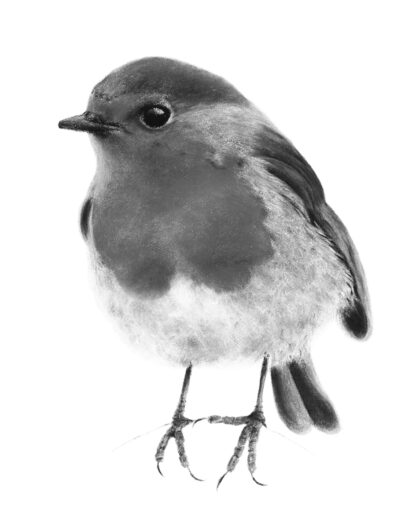
Most of the houses of East Sheen in south-west London were built on farmland as part of the great explosion of suburbia between the 1890s and 1930s. The houses are solid and the rear gardens long. There are ancient copses in nearby Richmond Park and the surround­ing patches of common land but most of the garden trees were planted by the first residents and have grown over the years to maturity, just as the hedges of hawthorn and privet have grown taller and thicker. Patient gardening turns the soil and throws up worms and hundreds of other varieties of insect. A consequence of all this activ­ity is that, with the destruction of wild woodland and the poisoning of farmland by chemical fertilizers, perhaps the safest place for wild birds is now a leafy suburb – apart, that is, from the large number of cats, sitting with deadly patience under hedges and in long grass, but I’ll come back to them.
SF magazine subscribers only
Philosophical Designs

Philosophical Designs

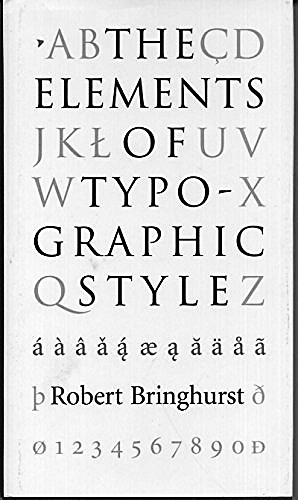
Sometimes you come across a book that changes how you view the world. For me one such was Robert Bringhurst’s The Elements of Typographic Style (1st ed. 1992). My father gave me a copy of the third edition when I was just beginning my own career as a copy-editor, and it opened my eyes to a new philosophy of life applied to the arrangement of type. Until then, I had never really thought about what text looked like. I liked books to have attractive covers, but the words inside were just words, weren’t they? How wrong I was.
SF magazine subscribers only
The Crème de la Crème

The Crème de la Crème

Muriel Spark’s most famous novel was published in 1961. It is set in 1930s Edinburgh, and the characters include schoolgirls at Marcia Blaine’s High School for Girls, the dull headmistress Miss Mackay, the singing teacher, the art master and, of course, the unforgettable Miss Brodie, the mainspring of the action. The so-called Brodie set of girls are what she calls the crème de la crème, the elite, the elect, the chosen few, chosen by Miss Brodie herself, their presiding deity.
SF magazine subscribers only
A Nasty Business

A Nasty Business

H. G. Wells’s The War of the Worlds (1897) has long been one of my favourite books. I first read it half a century ago – when I was about 10, to judge by the date on my Penguin edition (price 3/6d). I must have read it half a dozen times since; my battered copy is now held together with Sellotape. Recently I began watching a television adaptation: it was so disappointing that I abandoned it halfway through the first episode. This unhappy experience led me to question why it is that I like the book so much.
SF magazine subscribers only
Fidget Pie

Fidget Pie

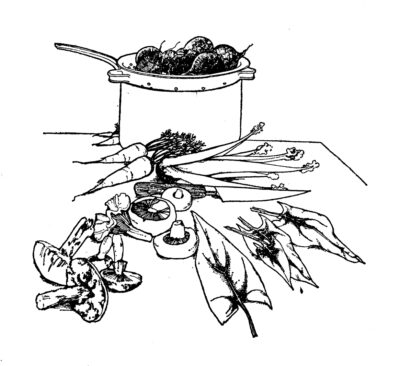
Huffkins and Fleads, Surry Ponds and Manchets, Frumenty, Minnow Tansies and Fidget Pie. These evocative recipe titles were what first hooked me; fantastical-sounding to my ear, they might have sprung from the pages of a Lewis Carroll story. They were, in fact, authentic recipes in an extraordinary volume I found in a second-hand bookshop more than a decade ago called Good Things in England, by Florence White. It wasn’t Alice in Wonderland, but it led me down a rabbit hole of sorts. I’ve been obsessed with the book and its author ever since.
SF magazine subscribers only
1st December 2022

Slightly Foxed Issue 76: From the Editors

This issue of Slightly Foxed comes with our very best wishes to you all from all of us here for Christmas and the coming year. However there’s no escaping the fact that these are anxious times, and we were touched by a reader in Australia who wrote to us recently: ‘I can only say, to all the Slightly Foxed team, that you are a saviour. Slightly Foxed has kept me in touch, kept me sane, made me relish the humour, the warmth, the quirky charm of the English way of doing things.’ Wherever you are in the world, we hope you feel the same.
- Gail Pirkis & Hazel Wood
From the editors
‘This book is for The House’ | Gavin Maxwell, The House of Elrig

‘This book is for The House’ | Gavin Maxwell, The House of Elrig

The writer and naturalist Gavin Maxwell is best known for Ring of Bright Water, his moving account of raising otters on the remote west coast of Scotland. In his childhood memoir The House of Elrig he describes, with the same lyrical power that made that earlier book a classic, how it all began. In loving detail he evokes the wild moors around his Scottish home and the creatures that inhabited them. As was then the custom, he was ripped away from this paradise to go to a series of brutalizing schools. But always in his imagination he was at Elrig. It was his refuge and his escape, and the power of his longing and the ecstasy of each return fuel this haunting book.
The House of Elrig | Chapter I: The House

The House of Elrig | Chapter I: The House

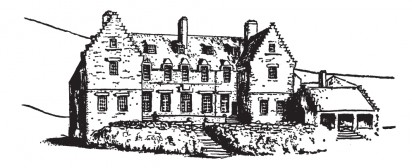
You can see the house from a long way off, a gaunt, grey stone building on a hillside of heather and bracken. The road, very narrow, has climbed two or three hundred feet from the sea; slanting at first from the grey boulder beach up near-cliffs of coarse grass, bracken and thorn scrub, the few trees stunted and deformed by incessant westerly winds, so that their limbs and their heads seem to be forever bowed and straining towards the land; on and up, winding through poor agricultural land, where the fields with their rough dry stone walls alternate with patches of scrubland, thorn bushes and briar thickets with the bare rock showing between them; through the tiny village of Elrig, with a smithy and a ruined mill but no shop; then, a mile on at the corner of a ragged fir wood sheltering a loch, is the turning to the house.

Sign up to our e-newsletter

Sign up for dispatches about new issues, books and podcast episodes, highlights from the archive, events, special offers and giveaways.