




Header overlay

What excellent company you are!

I have been devoted to your podcast for over a year; it could be improved only by being more frequent. Every book I have ordered from you has been a delight; nothing disappoints. I receive your emails with pleasure, and that’s saying a lot. Slightly Foxed is a source of content . . . ’
K. Nichols, Washington, USA

Popular categories

Explore our library

Praisethurber

Praisethurber

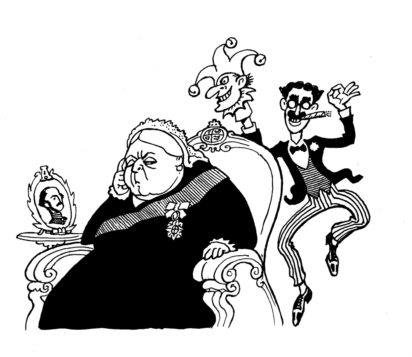
Not too many years ago, it would have been unnecessary to explain who James Thurber was. His short story ‘The Secret Life of Walter Mitty’, published in 1947 in the New Yorker (where most of his writing first appeared), soon found an international audience, and despite the best efforts of Danny Kaye to kill it off in a truly appalling film, it remains one of the most adept pieces of comic writing of its time, with most of the classic Thurber trademarks, including his delight in inventing words: among them the pseudomedical terms ‘obstreosis of the ductal tract’ and ‘streptothricosis’, and the information that ‘Coreopsis has set in’.
SF magazine subscribers only
Between Soft Covers

Between Soft Covers

About a year ago now a smiling vanman delivered twenty-six heavy brown-papered packages from a trolley and stacked them along the side of the hall. I scrabbled one parcel open and there they were: the first copies, straight from their Yorkshire printer, of my memoir, Learning Things. I felt triumphant. The chaotic, sometimes threatening, jumble that had been the ingredients of my family’s lives and mine were now tamed into some sort of order – not just a pile of typed pages but a real book. It is not very expensive to publish a book but why embark on the venture at all? Well, our histories and memories are the context of our children. To my children and grandchildren (three of them half- American) the there-and-then of my parents’ lives in India, at war, even my own experiences of boarding-school and as a terrified apprentice parachutist, seem almost unimaginably far away. My mother had died when I was 17 and my father, away for so long at war, had been a remote figure, so I too learned much about them as I explored the material I had.
SF magazine subscribers only
Large Busts and Slim Margins

Large Busts and Slim Margins

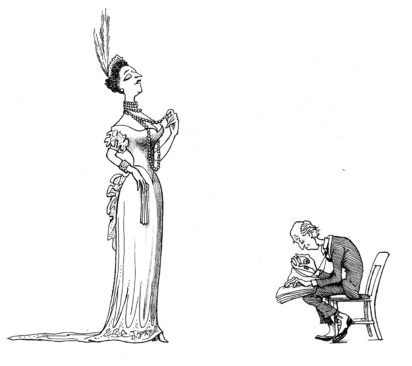
It remains one of the more surprising facts of life that the intrepid traveller Eric Newby, who by the time I knew him had the weatherbeaten cragginess of a man only happy when halfway up the Hindu Kush, should have carved out an earlier career astride the lower slopes of haute couture. Everyone has to start somewhere, however, and he put his first reluctant footprint on the fashion world as hapless gofer in the family firm of Lane & Newby, ‘Mantle Manufacturers and Wholesale Costumiers’, from which he rose, more by luck than by judgement, to the dizzy heights of Worth Paquin, later plateauing out into the sunny uplands of John Lewis in the incongruous position of buyer of Ladies’ Fashion.
A Landscape Without Figures

A Landscape Without Figures

I first read Voss about forty years ago and didn’t pick it up again until very recently. A few years later I was somewhat disappointed by one or two of White’s other books and this must have tainted my recollection. I certainly remembered Voss as a powerful metaphor for the condition of modern man, but when I reread it I was surprised by its force and inevitability. The Marxist critic George Lukács once defined the novel as the epic of a world from which the gods have departed. Voss is first and foremost a gripping epic and the gods have indeed disappeared – or almost: there is still spirituality in the air and the characters seem to have developed special antennae for it.
SF magazine subscribers only

Illumination and Shadow

‘It is Europe that is dying, my friends.’ This gloomy observation is, his devoted fans will recognize, the very essence of Alan Furst. It is delivered, in this case, by an anti-fascist Italian exile to a group of his compatriots in Paris in 1938, in Furst’s most recent novel, The Foreign Correspondent. But the world he has brought to life in all nine of his books is old Europe – from Lisbon to the Black Sea, though usually centred in the French capital – as it is smashed and swept away by war and the unstoppable momentum of power politics.
SF magazine subscribers only

One Foot in Eden

Writing her diary one evening in January 1951, Edwin Muir’s wife Willa reflected that her husband’s poems would live on, but ‘of himself, only a legend’. Why? Contemporary poets united in marvelling at Muir’s gifts, not just as a fellow poet, but as a human being. T. S. Eliot recognized in him a more ‘complete integrity’ than he had known in any other writer; Kathleen Raine envied his stillness and stability in a hurtling world; George Barker was moved by his visionary insight. Edwin Muir, Barker wrote, was ‘like a silent clock that showed not the time but the condition, not the hour but the alternative’. Surely something more solid than ‘legend’ should survive of such genius?
SF magazine subscribers only

Gray’s Anomaly

For years, then, I skipped modern poetry – until I discovered Billy Collins. Cue thunder and lightning! Now I’d walk backwards across town in a blizzard to buy the latest book of Billy Collins’s poems. His gift is to visit the familiar and reveal the outlandish. My lazy imagination wonders what lies behind that door, down that road, beyond that picture. Collins goes there. He’s a permanent trespasser on parallel worlds, making short expeditions and reaching offbeat conclusions.
SF magazine subscribers only
Inside the Brotherhood

Inside the Brotherhood

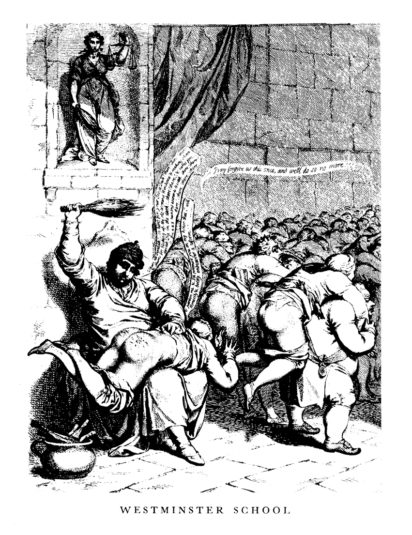
I first read the book when I was 16; later, Gaunt became a recurring figure in my life, cropping up unexpectedly like one of the incidental characters in Anthony Powell’s A Dance to the Music of Time. It was Mr Sweatman, my art master, who first gave it me to read and it had me utterly enthralled. Mr Sweatman was meant to be conducting the art class, but he was obsessed by a school  society called the Marionette Circle. He gave most of his attention to the few boys, members of the Circle, who arrived in class with tiny gibbeted figures dangling from their hands. He and they would disappear behind a lime-green screen, where the marionettes were made to perform their antics and danses macabres. Occasionally Mr Sweatman would emerge from behind the screen to bellow ‘Noisy!’ or ‘Guy Fawkes Night’ (a subject for us to paint). He was equally happy for the non-marionetteers to study art history; and with Gaunt’s book he found a perfect way of keeping me occupied.
SF magazine subscribers only
Going up in Smoke

Going up in Smoke

The dogmatic persecution of those whose unhealthy lifestyle falls below the high standards of the lawmakers is vividly and terrifyingly dramatized in Benoît Duteurtre’s novel The Little Girl and the Cigarette. The French writer sets his action in the near future – without saying exactly when – and in a familiarly Western democratic country – without saying exactly which. The story, or rather one of the two stories we follow through the book, opens with a distinctly modern dilemma.
SF magazine subscribers only

A Guernsey Lad

I have just returned from a long holiday in the Channel Islands visiting with Ebenezer Le Page, an old and valued friend, at Les Moulins, Ebenezer’s cottage by the sea. It is built of the same blue Guernsey granite that he is, and as he says, it will last for ever. They both will. Ebenezer is the creation of G. B. Edwards, the author of The Book of Ebenezer Le Page. It is his only book, published posthumously. It is fiction, but I don’t have to believe that if I don’t want to. The word ‘creation’ is precisely the correct term. This is not a work of literature. It is a thing of flesh and bone. Ebenezer and I had often journeyed together in imagination, and shared our tea in front of a coal fire, but now I had come to Guernsey in body as well as spirit, to walk the streets he walked and follow the path of his life.
SF magazine subscribers only

Love versus Science

Given this personal history, Carrie Tiffany’s quirkily titled first novel, Everyman’s Rules for Scientific Living, struck an immediate chord when the 2006 Orange Prize for Fiction shortlist was announced. Its intriguing plot turns on a state government-funded ‘Better Farming’ train, which rattles around rural Victoria in the 1930s, loaded with agricultural and domestic scientists preaching the gospel of science to farmers and their families. This was a book that demanded to be bought and read with the insistency of loud bells and flashing lights at level crossings. I was not disappointed.
SF magazine subscribers only

Needy Authors, Literary Hacks

In a tiny seventeenth-century cottage, fashioned from stone stables, I found the Idle Bookseller. Not that Ros Stinton lives up to her trade name, presiding as she does over the largest collection of books and pamphlets by or about the Victorian novelist George Gissing to be found anywhere. The shrine-cum-bookshop is up a steep flight of stairs at the back of her home, in Town Lane, Idle, once an ancient village but now swallowed up in the suburbs of Bradford. To the rear, which would have suited the mildly reactionary novelist, is the Idle Conservative Club. Down the road is the Idle Working Men’s Club, for which I imagine there is a long, if rather desultory, waiting list.
SF magazine subscribers only

Sign up to our e-newsletter

Sign up for dispatches about new issues, books and podcast episodes, highlights from the archive, events, special offers and giveaways.