


Header overlay

What excellent company you are!

I have been devoted to your podcast for over a year; it could be improved only by being more frequent. Every book I have ordered from you has been a delight; nothing disappoints. I receive your emails with pleasure, and that’s saying a lot. Slightly Foxed is a source of content . . .
K. Nichols, Washington, USA

Popular categories

Explore our library

Episode 40: Adrian Bell: Back to the Land

Episode 40: Adrian Bell: Back to the Land

The farmer-cum-writer Adrian Bell is best-known for his rural trilogy of Suffolk farming life, Corduroy, Silver Ley and The Cherry Tree. To explore Bell’s life and writing the Slightly Foxed editors are joined by Richard Hawking, chairman of the Adrian Bell Society, author of At the Field’s Edge: Adrian Bell and the English Countryside and editor of A Countryman’s Winter Notebook, a selection of Bell’s newspaper columns. From the pride of the wagon maker, the repeal of the corn act in the 1920s and the heartbreak of farmers going bankrupt to his bohemian mother making butter, his friend John Nash illustrating Men and the Fields and Second World War soldiers packing Corduroy in their kit bags, we learn that Bell is the perfect writer to reconnect people with the land, one whose work still feels relevant today. And in our usual round-up of recommended reading we enter Walter de la Mare’s dreams, explore Shackleton’s Antarctica and visit Catherine Fox’s fictional Lindchester, the setting for her glorious twenty-first-century Trollopian tales.
42 minutes
Still Life | Starting from the one-storeyed wooden shop . . .

Still Life | Starting from the one-storeyed wooden shop . . .

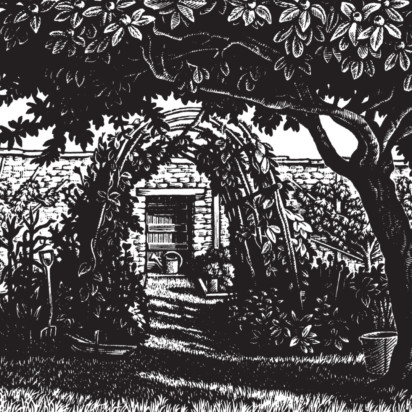
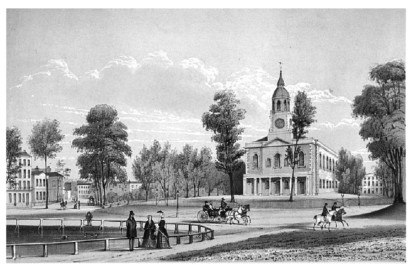
Grove Hill, later Grove Hill Road, another way up to my home, on the contrary, had a great deal to offer, starting from the one-storeyed wooden shop – little more than a shed, with a flat roof covered over in some sort of tarpaulin – of R. Septimus Gardiner, Taxidermist, his window displaying his skills: red squirrels on their hind-legs eating nuts against a background of branches and foliage; sinister-looking pike, with whisky-drinking eyes, submarine colours and scales, the Terror of the Deep, lurking against a background of yellowing rushes and trailing pale green river-weeds; a woodcock with little glass eyes . . .
A Pirate of Exquisite Mind

A Pirate of Exquisite Mind

We found William Dampier by chance. He was a small footnote in a book about buccaneers – those ‘original pirates of the Caribbean’ – which mentioned that there was a painting of him in the National Portrait Gallery. This seemed a strange outcome for a man who had pursued such a violent career and my husband and I went to see the picture. Entitled William Dampier – Pirate and Hydrographer, it shows a lean, strong-featured man with brown, shoulder-length hair and a watchful expression. There are no earrings, cutlasses or other Jack Sparrow-type flourishes. Instead, Dampier is wearing a plain coat with a white neck-cloth and holding a book, gold-tooled spine out, towards the onlooker.
SF magazine subscribers only

The Tape-recorder Man

In the mid-twentieth century a new device came into common use, enabling every Tom, Dick and Harry to record and play back sounds stored on magnetic tape. Arriving some 500 years after Gutenberg, the tape-recorder nevertheless had a small part to play in the preparation of text for print. A handful of enterprising writers began using it to record interviews with people whose opinions were (they judged) of interest to the reading public. The recordings were then edited, arranged in a palatable order, and published in book form. These interviews were more detailed and accurate than anything previously thought possible, except by the most tempestuous exponents of shorthand. However, critics of the new approach soon emerged. Were the books worth having? they asked. Was this ‘art’? Was it indeed proper authorship? And if so, who were the authors: those who spoke into the tape-recorders, or those who switched them on?
SF magazine subscribers only
Birds, Bees and Scorpions

Birds, Bees and Scorpions

If one were searching for the perfect antidote to Mis-lit one would find it triumphantly in Gerald Durrell’s My Family and Other Animals. First published in 1956 and in print ever since, the book is surely one of the most enjoyable English memoirs of the second half of the twentieth century. Every page is a celebration of the colours, sounds, smells, tastes and tactile sensations of the then unspoilt island of Corfu where the Durrell family arrived in March 1935 and where they lived until their expulsion from Eden in 1939 on the outbreak of war. It is beautifully written, with some astonishingly vivid and exact descriptions, whether of capturing a water snake in a stream or watching a lizard in its progress across a nocturnal ceiling, and it gets away, effortlessly, with all sorts of things one isn’t meant to get away with, not least the antics and tics of Funny Foreigners.
SF magazine subscribers only

Listening to the Heartbeat

Ryszard Kapuscinski understood the pitfalls of news reporting perfectly. He eschewed any pretence of being a dashing correspondent and wrote of the strange drive that propelled him to dangerous, forgotten places, often lonely but without an ounce of self-pity. As the agency reporter for Polska Agencja Prasowa (PAP) covering the entire African continent, Kapuscinski witnessed the dramatic birth of the ‘developing world’. He was a most unlikely witness, a Pole from a small town swallowed up by the Soviet Union who walked a tightrope when it came to surviving as a journalist. He went on to report from Asia, the Middle East, Latin America and the former Soviet Union. Kapuscinski witnessed more than 27 coups and revolutions, befriended Che Guevara, once awoke from a malarial daze to find Idi Amin standing over his hospital bed and was four times threatened with execution.
SF magazine subscribers only
Helluva Hotel

Helluva Hotel

The Ritz Carlton/Splendide was to be Bemelmans’s home for many years, and his book about it, which first appeared in 1956, has now been reissued in a slightly truncated form together with other stories about life under Lucullan tyranny. The new edition is entitled Hotel Bemelmans and is accompanied by scores of the author’s brilliant illustrations which resemble sketches that Edward Lear might have dashed off had he chosen the life of a gay boulevardier. (The bar in the Carlyle Hotel on New York’s Upper East Side still has murals painted by Bemelmans himself, by the way.)

Recognizing an Imagination Need

During Stalin’s purges in Russia, millions of people were sent to work in Siberian labour camps, and many died from lack of food, brutal punishments, overwork or the bitter cold. There were, however, some remarkable instances of survival. In the introduction to his novel The Forbidden Forest, the philosopher Mircea Eliade tells how some prisoners in one camp survived their ordeal. While those in other dormitories died at the rate of up to twelve a week, the prisoners of one dormitory stayed alive because they listened every night to an old woman telling fairy tales. Each prisoner gave up a precious portion of his daily bread ration in order to help feed the old woman so she could save her strength for the nightly storytelling sessions.
SF magazine subscribers only
19th July 2019

‘Such a pleasure to read . . .’

‘I am so pleased I am once again on your mailing list. This little publication is such a pleasure to read as are the podcasts to listen to.’
- L. Donnithorne, Christchurch, New Zealand
From readers

Brother Juniper’s Inquisition

Sometimes, confessing to a favourite book can bring a flush of embarrassment to the cheeks. We tend to make such selections at a susceptible age and they don’t necessarily stand up to the test of time. ‘Isn’t that a bit . . . well . . . teenaged?’ some inquirer will ask with a shrivelling look. I am only too aware of this snooty equivalent of the lifted lorgnette as I admit to a long-standing love of Thornton Wilder’s little slip of a book: The Bridge of San Luis Rey.
SF magazine subscribers only
Great Escapes

Great Escapes

At various times in my life, from my twenties to my fifties, I planned to travel through France by boat. As real life gradually rendered the achievement of this ambition ever more unlikely, I took to reading in a random way books by people who had done it. About twenty years ago I came across a large paperback called Isabel and the Sea. I knew nothing about it or its author George Millar, but I consumed it greedily, loving every word. It was the classic ‘through France and across the Mediterranean by boat’ book. Later, I tracked down and consumed equally greedily all the other books that George Millar had written, most of which were then out of print.
SF magazine subscribers only
Episode 16: Moving in Royal Circles

Episode 16: Moving in Royal Circles

Biographer and academic Jane Ridley and screenwriter and novelist Daisy Goodwin join the Slightly Foxed Editors to reveal the wealth to be found in royal biographies, memoirs and historical novels. From the remarkable diaries of Queen Victoria and the extraordinary life of Empress Elisabeth of Austria to Prince Albert’s cashmere breeches, a cottage meal at Sissinghurst with the Queen Mother, and Edward VII’s many mistresses, the parade of tales about the lives and loves of royal people roams far and wide. And we go on a on a quest for Queen Mary with James Pope-Hennessy in this month’s hunt through the magazine’s archives.
38 minutes

Sign up to our e-newsletter

Sign up for dispatches about new issues, books and podcast episodes, highlights from the archive, events, special offers and giveaways.