

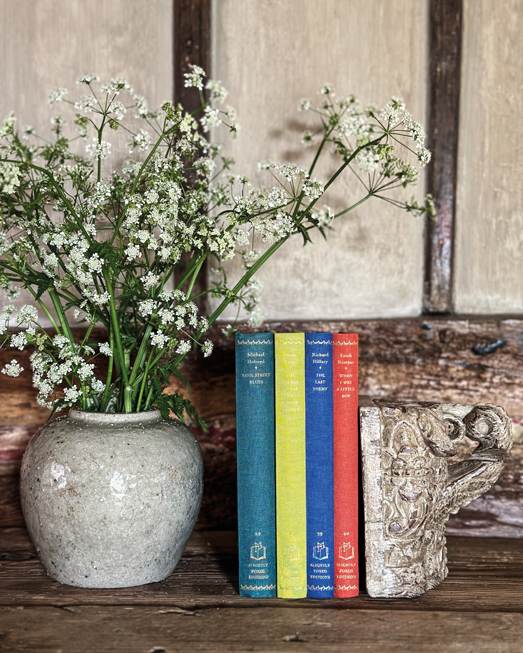


The magic apple tree is bare now. Stand at the top of the seven stone steps. Moon Cottage, and that part of the garden that lies in front of it, are at your feet, and the apple tree is straight ahead, your eyes are level with its lower branches. Through them you see the rise and fall of the fields beyond, piled upon one another like pillows . . .
Susan Hill wrote The Magic Apple Tree: A Country Year, nearly fifty years ago and it was recognized immediately as a worthy companion to the writings of Francis Kilvert and Ronald Blythe. Since then its fame has steadily spread and it continues to speak deeply to a new and devoted audience.
The Oxfordshire village she and her husband and young daughter settle in, is only 6 miles from a city but, as she observes, ‘it could be 106 miles away’. It is a community in its own right, surrounded by a patchwork of named fields for growing and grazing. It is not achingly picturesque, and her response to it is not the country-living fantasy of a town dweller. The family cottage is nearly two hundred years old, a hodge-podge of cold damp rooms. But Susan Hill, an early proponent of the conservation movement, is aware that you cannot come into a property built hundreds of years ago and attempt to frog-march it into the twentieth century. ‘You may have the legal right to do so,’ she observes tartly, ‘but you have bought a small piece of history, so morally, you cannot.’
Various revelations follow. Your first obligation to house and garden is to rub along with it for a year. You must realize that all period property is piercingly cold and that while you hope to live on what you grow, you will still have to co-exist with nature. All excellent and unsentimental advice, but what moves the reader most profoundly is her detailed and loving response to the natural world around her. An inveterate taker of very early morning walks, she leads us through a year of loving observation of change in hedgerow and field. We learn of the wonderful early morning hush that tells us that snow has fallen during the night. That village life is still built unfailingly around the festivals of the year, which are themselves still governed by the imperatives of sowing, celebrating and harvesting. A book to treasure and saviour, and as moving and thought-provoking as when it was first published.


Leave your review