

Header overlay

Issue 75

Beside the Seaside

Beside the Seaside

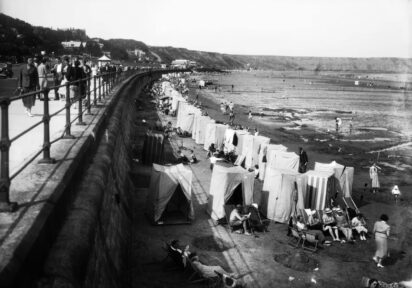
There is something timeless about the British seaside holiday. When I was a child we’d visit my grandparents, who had a beach hut at Studland on the Dorset coast. I would spend happy afternoons playing elaborate games in the sand, interrupted only by Granny leaping from the beach hut in her skirted bathing suit, calling out to me: ‘Galey darling, we are going for a swim!’ This would fill me with terror: I had still not yet learnt to swim. ‘Nonsense!’ she’d say, diving in. When I refused to go further than mid-shin, she’d put a thumb to her nose and surge off in a no-nonsense breaststroke. This daily ordeal taught me that a family holiday by the sea is not a straightforwardly happy affair: there are always, as my mum would say, good bits and bad bits.
SF magazine subscribers only
Monster-hunting

Monster-hunting

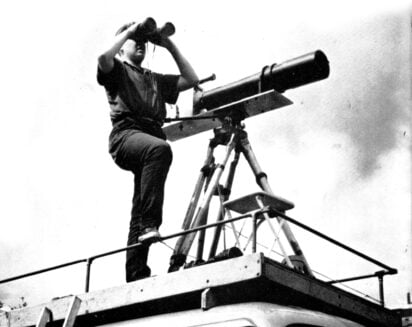
As a child I had three great ambitions. The first was to go to the South Pole – I practised wandering off to die in a storm like Captain Oates whenever snow fell in the local park. Then there was my wish to roam the London sewers having had a tantalizing glimpse of them in a Doctor Who episode. Finally, I longed to see the Loch Ness Monster and to know for sure that it existed. Now somewhat older, I find the thought of sub-zero temperatures has put me off polar exploration, and my zest for sewers is lessened by the prospect of bad smells and rodents. It would, however, still be exciting to behold across the peaty waters of Loch Ness something strange and wonderful, but I rarely give the matter much thought.
SF magazine subscribers only
An Uneasy Peace

An Uneasy Peace

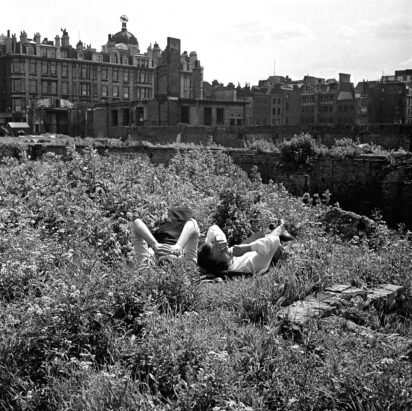
The World My Wilderness strikes me as an instance of fiction that reveals as much about time and place as bald historical facts. The novel is set in 1946, when countries, societies and most of all individuals are forced to adjust from a state of total war to an uneasy peace. Treachery, betrayal, death have cast long shadows; families or couples separated for years meet across chasms of national and personal difference. Morals are twisted and corrupted; everyone is compromised by their character, circumstances and reactions to where they find themselves, which is rarely where they thought they were. The narrative is dark, complex and subtle, with much crucial information implied obliquely or imparted as it were off-screen.
SF magazine subscribers only
Philosophical Designs

Philosophical Designs

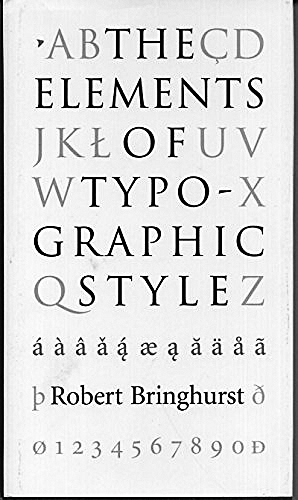
Sometimes you come across a book that changes how you view the world. For me one such was Robert Bringhurst’s The Elements of Typographic Style (1st ed. 1992). My father gave me a copy of the third edition when I was just beginning my own career as a copy-editor, and it opened my eyes to a new philosophy of life applied to the arrangement of type. Until then, I had never really thought about what text looked like. I liked books to have attractive covers, but the words inside were just words, weren’t they? How wrong I was.
SF magazine subscribers only
The Crème de la Crème

The Crème de la Crème

Muriel Spark’s most famous novel was published in 1961. It is set in 1930s Edinburgh, and the characters include schoolgirls at Marcia Blaine’s High School for Girls, the dull headmistress Miss Mackay, the singing teacher, the art master and, of course, the unforgettable Miss Brodie, the mainspring of the action. The so-called Brodie set of girls are what she calls the crème de la crème, the elite, the elect, the chosen few, chosen by Miss Brodie herself, their presiding deity.
SF magazine subscribers only
A Nasty Business

A Nasty Business

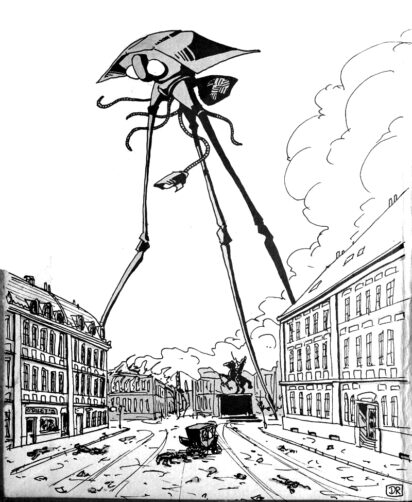
H. G. Wells’s The War of the Worlds (1897) has long been one of my favourite books. I first read it half a century ago – when I was about 10, to judge by the date on my Penguin edition (price 3/6d). I must have read it half a dozen times since; my battered copy is now held together with Sellotape. Recently I began watching a television adaptation: it was so disappointing that I abandoned it halfway through the first episode. This unhappy experience led me to question why it is that I like the book so much.
SF magazine subscribers only
Fidget Pie

Fidget Pie

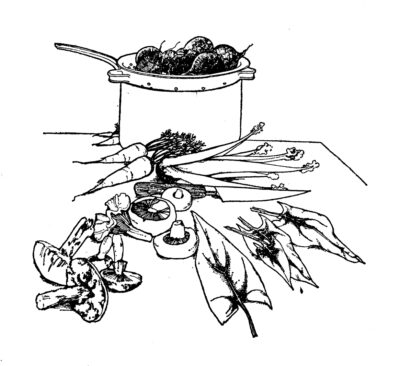
Huffkins and Fleads, Surry Ponds and Manchets, Frumenty, Minnow Tansies and Fidget Pie. These evocative recipe titles were what first hooked me; fantastical-sounding to my ear, they might have sprung from the pages of a Lewis Carroll story. They were, in fact, authentic recipes in an extraordinary volume I found in a second-hand bookshop more than a decade ago called Good Things in England, by Florence White. It wasn’t Alice in Wonderland, but it led me down a rabbit hole of sorts. I’ve been obsessed with the book and its author ever since.
SF magazine subscribers only
Masefield’s Magic

Masefield’s Magic

I was 8 when I first read John Masefield’s The Box of Delights – in the late 1960s, in the high-ceilinged classroom of a Victorian-built school in East London. I had not long been reading ‘chapter books’ as we called them, and this was the longest, most challenging and most sophisticated one I had yet encountered – and by far the most rewarding. It’s not easy to convey the peculiar atmosphere of it: scary but funny; fantastical but believable; lyrical yet down-to-earth; grotesque, even nightmarish in parts, yet told in a friendly voice. Years later, when I had forgotten most of the details of the actual story and characters, the feeling of it remained with me, like the lingering memory of a dream.
SF magazine subscribers only

Unpacking My Grandparents’ Books

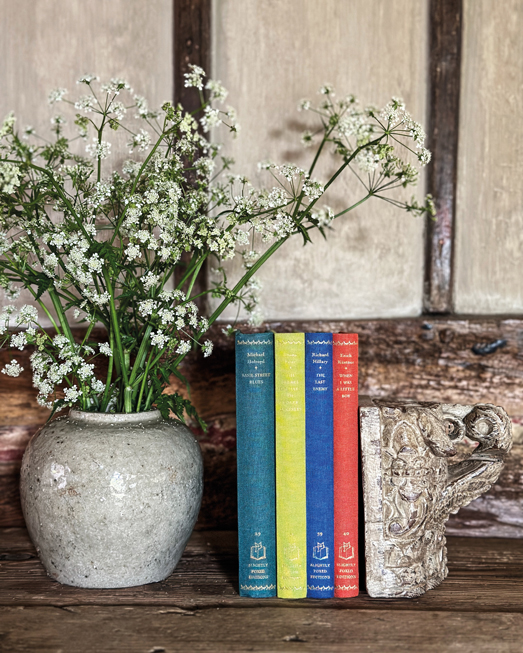
It is one of life’s ironies that when we are young, and keen to establish our own identity and place in the world, we have little interest in the experiences of older generations; by the time we come to find their stories fascinating, it is often too late. I remember my paternal grandparents as a rather severe elderly couple who, on their annual visits from Frankfurt, seemed to cast a pall of gloom over the household. After my parents’ divorce we lost contact, so I had little idea of who they really were or what they had experienced in the course of their eventful lives. Then, a few years ago, I inherited a small collection of books that had belonged to them. Along with some old photo albums and other family mementos, they revealed a rich inner life.
SF magazine subscribers only
A Martyr to the Truth

A Martyr to the Truth

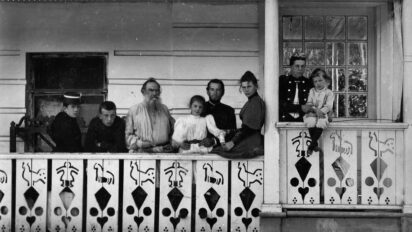
I was back home for Christmas and convalescing from the toxic fuzz induced by months of a student existence. I lay in bed mostly trying to ignore Anna Karenina, a brick of a Penguin Classic that I had to read before rejoining the fray. A scan of the first page had been enough to convince me Tolstoy was going to be boring. No kind of style. Ordinary plot and ideas. The work of a literary oaf who handled language like a peasant feeding chickens from his bucket.
SF magazine subscribers only

Sign up to our e-newsletter

Sign up for dispatches about new issues, books and podcast episodes, highlights from the archive, events, special offers and giveaways.