Header overlay

Articles & Extracts

We’ve Been Here Before

We’ve Been Here Before

When Northern Rock first ran into trouble in the autumn of 2007, worried customers queued outside branches from the early hours in an attempt to get their money out. ‘This is the first run on a British bank since Mary Poppins,’ said someone. It was one of those easy jokes which succinctly sum up what is going on. In the film Mary Poppins the run on the bank is a mistaken one, triggered by a child loudly demanding the return of the money which a benign father has banked for him. The idea that depositors might lose their money in Northern Rock was equally mistaken.
SF magazine subscribers only
Not So Cosy After All?

Not So Cosy After All?

On the face of it, crimes don’t get much cosier than those which appear in the first six novels of the Flavia sequence. The convention of Slightly Foxed dictates that titles are normally tucked away in a footnote, but I think it is worth savouring the delightful cadence of all six here: The Sweetness at the Bottom of the Pie; The Weed that Strings the Hangman’s Bag; A Red Herring without Mustard; I Am Half-Sick of Shadows; Speaking from among the Bones and The Dead in Their Vaulted Arches. To me, each of these seems to have exactly the right balance of whimsy and menace, and these are promises that are admirably fulfilled in the books that follow.
SF magazine subscribers only

The Brick of Fate

In the 1970s student grants went a long way. After paying for all the prescribed texts, there was still money left over for a good rummage in the second-hand bookshops. On a whim one day, I bought three novels by an author I had never heard of – Peter de Vries. I was attracted by the cyclamen red typeface on their bright yellow Victor Gollancz covers, and at 10p each they were a bargain. What I didn’t know was that 30p could set my slant on the world.
SF magazine subscribers only
Contemplating Eternity

Contemplating Eternity

Although I want to tell you about a poem, let us begin with objects. I would like you to come with me first to Birmingham, to visit the Staffordshire Hoard. These rich and intricately worked treasures, most of which were once decorations for weapons, conjure images of kings and warriors in the Dark Ages: Anglo-Saxon noblemen, proud and brave, the gold and garnets on their war gear flashing in the light of the sixth-century sun. The few objects that are not overtly martial are reli­gious, and these show us how Christianity and paganism overlapped in England at this time: there are Christian crosses in the hoard, but they are decorated with the interlaced plants and animals characteristic of the pagan Germanic peoples. Perhaps most of all, though, the Staffordshire Hoard makes one think of passing, inheritance and decline. Some of the objects are decorated with re-used Roman glass, a reminder both of Roman technology and of Rome’s fall; more poignantly still, the majority of the items were systematically dismantled or broken up before they were buried, the precious metals and stones separated from the iron, wood, bone and cloth they once adorned. There must have been a reason for this, but that reason is lost, and those who understood it have been dust for centuries.
SF magazine subscribers only
Mr Pye’s Dilemma

Mr Pye’s Dilemma

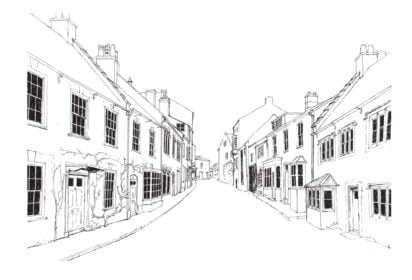
Our boat journey from Jersey to Sark passes through a dangerous past. The rocks between the two islands are called in Jersey slang the Pater Nosters, for it is said that if a ship were to get too close to them, then prayer was all the mariners had left to save themselves. We notice how Jersey is well defended from the sea: an Elizabethan castle, another fort and then the grinning mouths of German fire-control towers, cadavers of wartime occupation. Jersey has always judged itself worth the effort to defend.
SF magazine subscribers only

On the Shores of the Mediterranean

If brief enthusiasms can make independent booksellers seem fickle, some redemption may be found in our loyalty to individual authors. We often have longer memories than both chain retailers and publishers, and our customers’ support depends on our taste as much as on our efficiency. Hot news quickly cools, but the favourites abide: Shirley Hazzard, Javier Marías, Robert Edric, William Maxwell, Penelope Fitzgerald. My colleagues, who prefer other writers, gracefully ignore my shop-floor eulogies which they have heard a thousand times.
SF magazine subscribers only
A Taker of Heads

A Taker of Heads

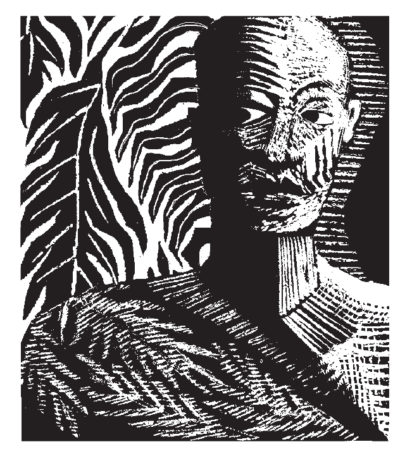
Chinua Achebe’s first novel, Things Fall Apart (1958), was an early and spectacular part of the flowering of West African literature after independence from colonial rule. It seemed, perhaps especially to a South African like me living under increasingly draconian controls, a wonderful illustration of what liberation might mean. Now, I suspect, it is one of those books which almost everyone knows about but very few people other than students actually read.
SF magazine subscribers only
Gone to Earth

Gone to Earth

There’s a classic type of resourceful, unassuming hero that they just don’t make any more (think Richard Hannay), and the narrator of Geoffrey Household’s novel Rogue Male, a ‘bored and wealthy Englishman’, is far too well bred ever to give his ‘widely known’ name away. The first fifty pages of this sharp little thriller – which I have a particular personal reason for enjoying, as will become apparent – form a self-contained adventure set in the summer of 1938, in which the aforementioned Englishman, after a fortnight’s sport in Poland, finds himself at a loose end in the Bavarian Alps and in possession of a Bond Street rifle complete with telescopic sight.
SF magazine subscribers only
Slow Train to Malgudi

Slow Train to Malgudi

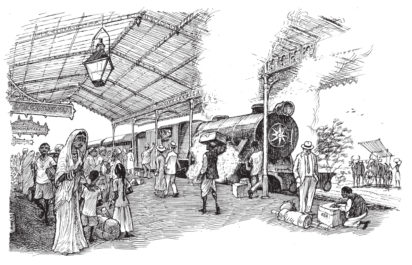
I’m not sure whether it was India that introduced me to R. K. Narayan or R. K. Narayan who introduced me to India. Each superimposed itself on the other so that they became indistinguishable. Travelling round India any time in the 1970s meant reading a Narayan; and reading a Narayan anywhere else meant being transported to India. An Indian train journey was unthinkable without one. In a sense it was one, for the Narayan experience began as soon as you ventured on to railway property. This was his world. His dozen or so novels had been inspired by the vision of a unremarkable town on the main line to Madras with a station nameplate that announced it as MALGUDI. Railway life loomed so large in his fictional Malgudi that attentive readers came to know exactly what to expect and could stroll from ticket barrier to tiffin room as if to the platform born.
First-rate Monsters

First-rate Monsters

Picture, if you will, the most appallingly pretentious person in the world: a well-dressed middle-aged lady at the piano, plonking her way through the slow first movement of the Moonlight Sonata. She is wearing her ‘well-known Beethoven expression’ with the ‘wistfully sad far away look from which the last chord would recall her’. Her guests, enduring the entertainment in various attitudes of suicidal boredom, give dutiful little sighs as that last chord fades, and then steel themselves for . . . another rendition of the slow first movement of the Moonlight Sonata! For – though she pretends otherwise and that Beethoven composed the trickier second movement largely by mistake – it is in fact the only tune she can play.
SF magazine subscribers only

Sign up to our e-newsletter

Sign up for dispatches about new issues, books and podcast episodes, highlights from the archive, events, special offers and giveaways.