Header overlay

Articles & Extracts

A Year in Barsetshire

A Year in Barsetshire

In the spring of 2020, amidst the early devastation of Covid-19, I found myself unable to read. I was grappling with the after-effects of an accident when the pandemic struck, so my concentration was already fractured by the time the streets fell silent. Deprived of the consolations of print, one April afternoon I pressed play on the first chapter of the audiobook of Anthony Trollope’s The Warden as I left the house for my daily walk. I did so without much expectation that the noise would do anything other than provide a mild distraction from the exigencies of the day, but within minutes the cathedral close of Barchester had opened up before me and I was hooked. What follows is an account of the year I spent among the inhabitants of Barsetshire, and of the solace I found in the connected stories of the Barchester novels.
SF magazine subscribers only
Masefield’s Magic

Masefield’s Magic

I was 8 when I first read John Masefield’s The Box of Delights – in the late 1960s, in the high-ceilinged classroom of a Victorian-built school in East London. I had not long been reading ‘chapter books’ as we called them, and this was the longest, most challenging and most sophisticated one I had yet encountered – and by far the most rewarding. It’s not easy to convey the peculiar atmosphere of it: scary but funny; fantastical but believable; lyrical yet down-to-earth; grotesque, even nightmarish in parts, yet told in a friendly voice. Years later, when I had forgotten most of the details of the actual story and characters, the feeling of it remained with me, like the lingering memory of a dream.
SF magazine subscribers only
A Glorious Menagerie

A Glorious Menagerie

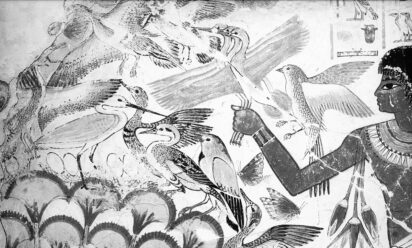
‘Of all the civilizations of the ancient world, none enjoyed such a close and significant relationship with the animal realm as that of the ancient Egyptians.’ So Philippe Germond, an Egyptologist at the University of Geneva, plunges into his subject in An Egyptian Bestiary (2001). But already he is outflanked on the facing page by the regal profile of a leopard’s head carved in sunken relief, the sharply incised contour framing it with a powerful line of shadow. Which is fitting, for this is above all a picture book, led by 280 spectacular photo­graphs (mostly credited to his co-author Jacques Livet) of artworks that speak across the millennia and challenge the imagination.
SF magazine subscribers only
Fulmar, Gannet and Puffin

Fulmar, Gannet and Puffin

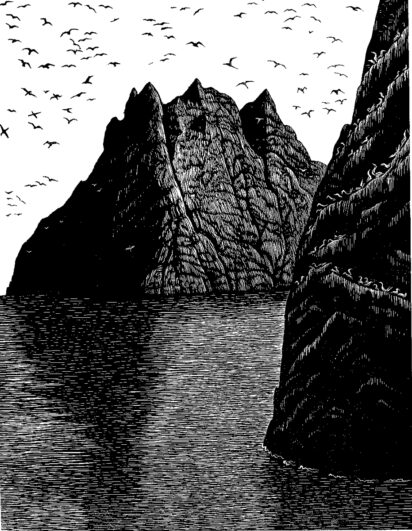
In shelves to the left and right of the fireplace in our dining-room, my husband keeps an extensive collection of books about Scotland. Half a shelf is given over to volumes on St Kilda. If ever I feel the need to escape from Hammersmith to a landscape of vast skies, mountainous waves, sea-spray blowing like white mares’ tails across the rocks, this is where I turn: to the extraordinary archipelago, 110 miles west of the Scottish mainland, whose black cliffs and dizzying stacks, the highest in Britain, unfold in a drumroll of Gaelic names – Mullach Mor, Mullach Bi, Conachair.
SF magazine subscribers only
The Art of Bookselling

The Art of Bookselling

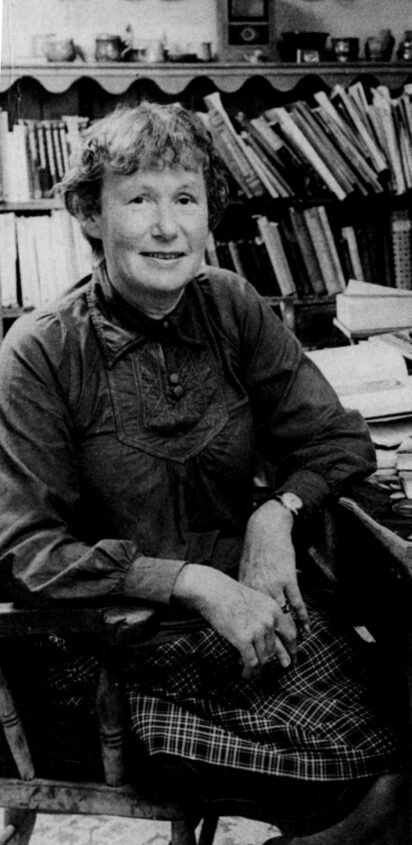
Just as most good books aren’t really about the things they say they are, Penelope Fitzgerald’s The Bookshop (1978) isn’t really about a bookshop. It’s about English insularity, politics, the misuse of power and the headstrong persistence of hope, with Florence Green’s Suffolk bookshop a symbol for every newcomer who ever found their best intentions beaten down by suspicion and hidebound tradition. At the end of the book, the formidable local matriarch Mrs Gamart manipulates her MP nephew into pushing through Parliament a bill specifically designed to close down Florence’s shop in favour of a local arts centre. The arts centre is Mrs Gamart’s pet project, and the town of Hardborough falls into line behind her. Florence has to con­clude that ‘the town in which she had lived for nearly ten years had not wanted a bookshop’. That is the last line of a book about a book­shop. An upbeat ending it is not.
SF magazine subscribers only
Not So Verray Parfit

Not So Verray Parfit

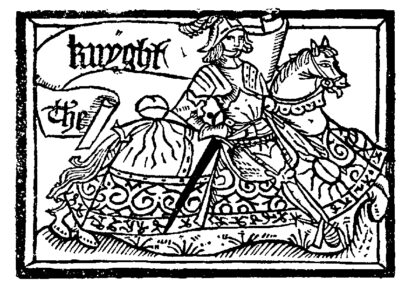
I once taught English at a girls’ school in which the head of depart­ment didn’t like poetry. It’s an odd aversion but it worked well for me. The poetry room was right at the top of a very tall building, and thither wended her way every pupil in the place, to be rewarded by peaceful sessions chewing over every kind of poem, from epic to lyric to limerick. But some of these girls also had to pass public exams. The A-level syllabus was dictated by a higher authority and this term the poetry module featured Chaucer. No problem in that. To me, he is the tops. He understood the complicated, subtle, self-deluded and some­times glorious nature of human beings better than any writer, before or since, and he displayed enough humour, generosity and lightly worn erudition to keep a whole pilgrimage entertained from here to eternity.
SF magazine subscribers only
Following the Music

Following the Music

As deputy literary editor of the Independent on Sunday in the mid-1990s, it was my job to organize and compile several of the routine book columns and features every week. One such was the long-running ‘The Book that Changed Me’. It involved typing up a short telephone interview with a literary or other type of celebrity; less frequently, the contributor would write the copy themselves. It can be difficult to drum up fresh ideas once a column has been underway for some time, but we never ran short of suggestions and contribu­tions. One highlight for me was hearing Christopher Lee declaim at length down the line in Elvish, in his fanatical enthusiasm for The Lord of the Rings. I can only imagine how delighted he must have been to be offered the part of Saruman.
SF magazine subscribers only
Through a Glass, Madly

Through a Glass, Madly

In my day, the A-level Spanish syllabus included a few score of the key pages of Don Quijote – windmills mistaken for giants, labourers for lords, prostitutes for princesses, and so on. When I got to univer­sity I found that we were supposed to know the whole novel. I struggled through most of it but couldn’t handle its digressions and longueurs. Cervantes could veer off at tangents and not return for a hundred pages or more. My tutors encouraged me to persevere. After all, Cervantes was revered as Spain’s Shakespeare.
SF magazine subscribers only
9 January 1942 | To War with Whitaker

9 January 1942 | To War with Whitaker

This morning I went with Michael and Esther Wright to Mena where we met Freya Stark, Sir Walter Monckton and some more. We mounted donkeys and set off with a picnic lunch for Sakara. My donkey was called Telephone and trotted along well, but some of the others were less amiable and progressed by fits and starts. Freya Stark, dressed in a hideous sporting jacket, spun on her own mills in Italy, and snake gaiters topped by a large double-brimmed felt hat, was a sight for the gods, and her running com­mentary to her donkey made Walter Monckton laugh so much he nearly fell off his mount. This evening I went to the Scottish Hospital to visit the wound­ed. It was tragically full. I found it difficult not to flinch at some of the sights and had to struggle to appear cheerful and smiling. I heard tonight we have taken Sollum. Japan has declared war on the Dutch East Indies.
The Empress of Ireland | Noël Coward visited Tangier

The Empress of Ireland | Noël Coward visited Tangier

My routine was to stay in the house and write most days, and then go out with Brian for dinner, either to a restaurant or the home of one of his friends. La Belle Hélène was the bar and res­taurant we most frequented, owned by a strangely glamorous, middle-aged French lesbian with a face of elephant hide. She was said to have bought the establishment with money earned during a long circus career as a motorcyclist on the flaming wall of death. We ate elaborately at La Belle Hélène and drank copi­ously, and Brian indulged us extravagantly at lunch and dinner.

Sign up to our e-newsletter

Sign up for dispatches about new issues, books and podcast episodes, highlights from the archive, events, special offers and giveaways.