

Header overlay

Articles & Extracts

Brothers in the Abruzzi

Brothers in the Abruzzi

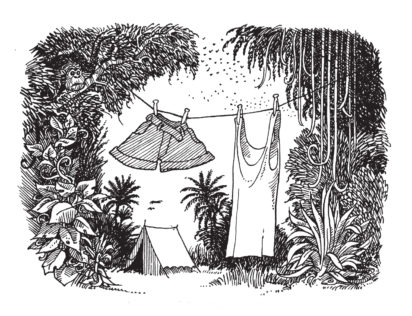
John Verney, painter, illustrator, author and inventor of the invaluable maverick desk diary, the Dodo Pad (‘to stop one becoming extinct from the pressures of modern life’), loomed large in my childhood. Apart from being among my parents’ closest friends and neighbours, and paterfamilias of a large brood of children, Shetland ponies, chickens, cats, cows and bees, all of which somehow became inextricably mixed up in my memory, he was always there. Most fathers were away somewhere doing a job, but whenever we went to Runwick, the Verneys’ rambling farmhouse on the edge of Farnham in Surrey, he was always to be found wandering vaguely around in his shapeless jacket, or making paint-spattered forays from his studio in the barns, or presiding laconically over whatever rabble-rousing meal was in progress.
SF magazine subscribers only

A Kinder, Gentler Thoreau

It is a lazy Sunday morning. I am seated in my comfortable chair, wrapped in my old dressing-gown, my coffee in hand, having turned the final page of Jayber Crow: The Life Story of Jayber Crow, Barber, of the Port William Membership, as Written by Himself. It is a novel by Wendell Berry. Jayber was placed in my hands as a gift. A box of emeralds would not have pleased me more. He has become one of those rare friends with whom I look forward to sharing the rest of my life.
SF magazine subscribers only

Goodbye to Hollywood

Lambert had been the editor of Sight and Sound from 1949 to 1955 and was almost single-handedly responsible for transforming it from, in his words, ‘an intolerably boring magazine’ into one of the most influential film journals of that era and beyond. The Slide Area: Scenes of Hollywood Life was first published in 1959. As the subtitle suggests, it’s essentially a series of interlinking short stories rather than a novel per se. The book is peopled by an ensemble cast of LA waifs and strays who glide in and out of focus and in and out of the life of a nameless narrator, an English scriptwriter for a Hollywood studio. Among this motley crew is Mark, an ex-British public schoolboy turned beach bum, a washed-up bisexual gigolo happy to flow with the tide as long as the sun is shining; Emma, a teenage ingénue from Illinois desperate to break into pictures; and Clyde, the delinquent son of a tycoon who surrounds himself with sycophantic flunkies. Best of all, there is the wonderfully grotesque Countess Marguerette Osterberg-Steblechi, a corpulent Austro-Hungarian multi-millionairess. This relic of the old Europe yearns only to take one last voyage around the globe. But now deaf and blind, she is at the mercy of her two parsimonious nieces. Rather than squander their precious inheritance, this rapacious pair resort to faking the trip, ingeniously using gramophone records, heaters and fans to carry  out the deception in the Countess’s own Californian home.
SF magazine subscribers only

French without Tears

Sébastien Japrisot is a name that sounds thoroughly French, though it snags awkwardly on the hinges of the surname. Which is because it’s actually an anagram of the author’s real name, the more euphonious Jean-Baptiste Rossi. The intriguingly verbose title of his most memorable thriller, however, is a literal translation of the original French – La dame dans l’auto avec des lunettes et un fusil. Lady, car, gun – you get the picture – but the glasses? There’s the snag, the detail that doesn’t feel quite right. What’s going on? I’m afraid I can’t possibly tell you.
SF magazine subscribers only
The Dream that Failed

The Dream that Failed

Nadezhda Mandelstam was born Nadezhda Khazina in the southern Russian town of Saratov, on the Volga, in 1899, into a middle-class Jewish family. Her father was a lawyer and her mother a doctor, one of the first women in Russia to be allowed to qualify. Early in her life the family moved to Kiev, where Nadezhda attended school and then studied art. But she is famous not as an artist – she never pursued her career – but as the wife, and widow, of the poet Osip Mandelstam, whom she met in Kiev in 1919 and married soon after; and for the two-volume memoir she wrote clandestinely in the 1960s, remembering her life with her husband and reflecting on the ‘catastrophe’, as she calls it, that had overtaken them and their friends, acquaintances and contemporaries, and their homeland, since the Bolsheviks seized power.
SF magazine subscribers only

Dominion over Palm and Pine

When people ask me what they should read about the Empire, I suggest they go to the five volumes of the Oxford History of the British Empire, where they will find a mass of recent research synthesized in scores of scholarly essays written by contemporary academic historians. But if they want to sense what the Empire was like, how it felt and smelt and looked, if they want to picture traders of the Hudson Bay Company with their beaver hats and sledges or Boer trekkers lumbering across the veld in their great ox-wagons – then I advise them to read James Morris.
SF magazine subscribers only
Lark, Hare, Stone

Lark, Hare, Stone

Memories of the British Empire may be receding around the world, but they live on in Ireland, the first and closest of Britain’s colonies. It is not hard to see why. For centuries all the techniques that would eventually be deployed to subdue various other peoples were initiated there: armed force, mass slaughter, the theft of land, economic and racial bullying, the suppression of language, enslavement, starvation. Then, as they cut their losses, the British played their final card – partition.
SF magazine subscribers only
Fifty Years On

Fifty Years On

If, as I did, you came of age in the Sixties, then one rite of passage you may have undergone was reading John Fowles’s bestselling Bildungsroman, The Magus (1965), which provided, it was said, an experience ‘beyond the literary’ – in my case, a vicarious ego trip. How flattering to have so much time and energy expended in order to make you a better person! Even the indignant narrator, Nicholas Urfe, who compares what he’s been through to ‘exposure in the vil­lage stocks’, can scarce forbear to cheer: ‘that all this could be mounted just for me’.
SF magazine subscribers only

The Judge’s Progress

Cyril Hare is the pseudonym of Alfred Alexander Gordon Clark, who was born in 1900 and died in 1958. He was a barrister who became a county court judge and took his writing name from his London home, Cyril Mansions in Battersea, and his chambers in the Temple, Hare Court. His great strength is the use he made of his expert knowledge, both as barrister and judge. Tragedy at Law, published in 1942, was his favourite novel and introduced his hero, Francis Pettigrew, an ageing and very able barrister but one who has never fulfilled his early promise. Pettigrew is aided in his detection – or is it perhaps the other way round? – by a professional police officer, Inspector John Mallett of Scotland Yard, who had appeared in previous detective stories by Hare.
SF magazine subscribers only
An Appetite for Looking

An Appetite for Looking

‘Is Pevsner in the back?’ A familiar question from the driver when setting off for almost any destination in England – familiar not from my childhood (I don’t think there were Pevsners at home) but from years of adult friendship with people interested in buildings and places. Yes, here is Leicestershire in the footwell, and the seat pocket yields Nottinghamshire, which may mean that instead of driving straight past Hickling (say) we’ll take time to look at the ‘unusually rewarding number of engraved C18 and early C19 slate headstones in the churchyard’. If the church door is open we’ll find art of every century inside, from the ‘wild interlacing’ of a carved Saxon coffin to the ‘poor box, small, 1685, but still not at all classical’. We’ll even notice the door hinges on the way out, enjoying the extravagance of the medieval ironwork. Pevsner calls them ‘accomplished’.
SF magazine subscribers only

Sign up to our e-newsletter

Sign up for dispatches about new issues, books and podcast episodes, highlights from the archive, events, special offers and giveaways.