
Header overlay

What excellent company you are!

I have been devoted to your podcast for over a year; it could be improved only by being more frequent. Every book I have ordered from you has been a delight; nothing disappoints. I receive your emails with pleasure, and that’s saying a lot. Slightly Foxed is a source of content . . .
K. Nichols, Washington, USA

Popular categories

Explore our library

First Love

First Love

I can recall precisely where I was when Daphnis and Chloe opened in my hands like a flower: sitting on my father’s couch, my back to the window and the sun all around. Suddenly I felt the force of a wholly new, an important idea, something I had never considered quite that way before. I closed the book and, somewhat ridiculously, looked at its cover. My Penguin edition of Daphnis and Chloe was blurbed by Goethe: ‘One would do well to read it every year, to be instructed by it again and again, and to receive anew the impression of its great beauty.’
SF magazine subscribers only
Dog Days

Dog Days

Alethea Hayter’s clever, innovative book of 1965 turned a searchlight on a time, a place, a circle of people; it has surely inspired the subsequent fashion for group biographies, most brilliantly exemplified by Jenny Uglow’s The Lunar Men. Hayter’s book is short, succinct, intensely focused and cunningly structured. She moves forward day by day, homing in on each member of the cast – what they looked like, how they sounded: Elizabeth Barrett with her two thick curtains of dark ringlets and ‘the taut face of an Egyptian cat goddess’; Carlyle’s conversation – ‘a flood, a war-chant, a cavalry charge of splendid sentences’. All these people were leading social and literary figures of the time, a coterie who wined and dined almost daily – ‘breakfasts’ of six or eight, three hours of competitive wit and gossip.

Redeemed by Muriel

There are books I admire but don’t read again and books I reread compulsively. The Accidental Tourist by Anne Tyler falls into the latter category. It was only a recent seventh rereading that finally revealed why. It had taken me that long to hold the sum of this extraordinary novel in my head – to realize that this was a great and subtle piece of writing where every character, every phrase was a carefully chosen part of a magnificent and subtle whole. It is also, even after multiple readings, extremely funny.
SF magazine subscribers only
26th March 2021

Slightly Foxed Editors’ Diary • 26 March 2021

Spring has arrived, and with it the delivery to the office of our new Spring issue, the latest SF Edition, Laurie Lee’s As I Walked Out One Midsummer Morning, and the fifth in our series of Rosemary Sutcliff’s novels, Dawn Wind. Ahead of each delivery, we pore over spreadsheets, worry about stock levels, map out square feet and available bookshelf space, flick through fat folders of pre-orders and discuss quantities over the phone with Tracey at Smith Settle, our printers. And then the great day dawns . . .
- Anna Kirk & Gail Pirkis
From the editors
Episode 15: Reading Resolutions

Episode 15: Reading Resolutions

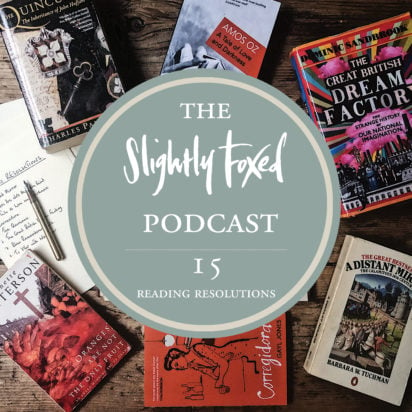
As we turn the page to a new decade, we’ve made some New Year resolutions. John Mitchinson and Andy Miller of Backlisted Podcast join the Slightly Foxed Editors to bring new life to old books, leading us off the beaten track with wide-ranging reading recommendations. From Frank O’Connor’s letters, Selina Hastings’s lives and Barbara Tuchman’s histories to the poetry of John Berryman, Gayl Jones’s Corregidora and Jeanette Winterson’s Oranges Are Not the Only Fruit, they journey through genres to revive literary curiosity. And in this month’s reading from the magazine’s archives, Richard Platt makes a convincing case for The Quincunx by Charles Palliser, falling under its curse of sleepless nights.  
39 minutes
Old Girls and Very Old Girls

Old Girls and Very Old Girls

I went to a girls’ boarding-school in 1972. It was only for an afternoon. I’d been staying with a friend for half-term and we stopped on our way into London to drop her older sister back at school. I can’t remember which it was. Wycombe Abbey? Cobham Hall? Or Benenden, then of matchless fame for the education of Princess Anne? Though I’d never actually been inside a boarding-school, I knew all about them from books like Third Form at Malory Towers by the evidence-based historian, as I supposed she was, Enid Blyton.

Not so Merry England

Ivanhoe is the one novel by Sir Walter Scott that needs to be discovered twice – if, that is, you first encountered it at school, as I did. To me then the plot seemed overcomplicated, and the whole thing only vaguely interesting; but reading it afresh as an adult, it strikes me as that rare thing, a great book, albeit a flawed one. Better novels of Scott’s such as Old Mortality and The Heart of Midlothian are no longer household names. Yet Ivanhoe lives on in the national consciousness for, clumsy as it sometimes is, it strikes a powerful chord, being a morality tale about the English vice of hypocrisy.
SF magazine subscribers only
If at First

If at First

A few years ago I was still managing to keep my mother – elderly and frail – living in her own home, which was what she wanted. But she had a collection of medical problems any one of which could flare up into a crisis without notice. Every now and again, I would get a call from one of her carers telling me that her GP had called an ambulance. I would then rush to the hospital to ensure she was properly attended to and to give her comfort. Deep down I was worried that she would never be able to return home again but instead would be cooped up in hospital or a nursing home for the rest of her life. In this period of acute anxiety I had two sources of comfort. One, naturally, was my family. The other – and I’m afraid this will seem a dreadful moment of bathos – was The Clicking of Cuthbert, a book of short stories by P. G. Wodehouse.
SF magazine subscribers only
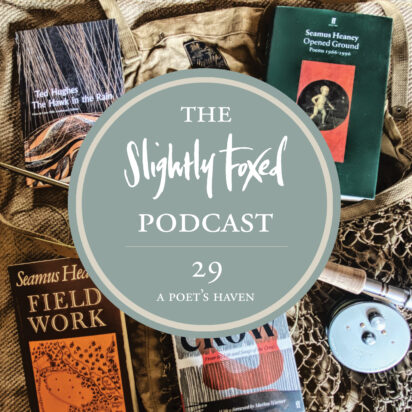
Episode 29: A Poet’s Haven

Episode 29: A Poet’s Haven

The artist Barrie Cooke had fishing in common with Ted Hughes, and mud and art in common with Seamus Heaney. Dr Mark Wormald, a scholar on the life and writings of Ted Hughes, has brought to light an extraordinary haul of poems, letters and drawings documenting a decades-long triangular friendship and a shared love of poetry and nature. He describes the spine-tingling discovery of Barrie’s cardboard box stuffed with correspondence and traces its history, starting with the first supper at Barrie’s Kilkenny home, and then at Jerpoint, also on the River Nore, where the trio forged their friendship, Seamus began Station Island and a poet’s haven flourished. From Ted’s dream of a burning fox man, climbing into Carrowkeel passage tombs and visits from Robert Lowell and Tom Paulin to fishing diaries, pike spoons and a stuffed trout, subsurface treasures are dredged up as our literary sifting takes us off the beaten track.
46 minutes
Thoreau’s Axe

Thoreau’s Axe

In 1973, my wife and I left a flat in St John’s Wood for a decrepit 5-acre smallholding in West Wales. There we continued, in cheerful penury, for the next twelve years. ‘Back in the days’, as we survivors of the Sixties like to say, self-sufficiency was the watchword, and the guru of that era’s back-to-the-landers was John Seymour (See SF No. 26, p.62). His contention, that a free and modestly prosperous peasantry is the best basis for a strong and stable society, was powerfully made by his writings and example, and remains, I believe, valid today. But equally appealing to many latter-day voluntary peasants was an earlier and very different prophet of self-sufficiency: Henry David Thoreau.
SF magazine subscribers only
High Flyer

High Flyer

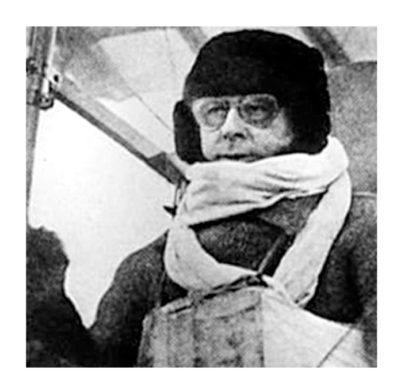
Robert Loraine was a magnificent man in a flying machine. I first encountered his story in an Anglesey meadow where he had two of his many crashes. Soon afterwards I chanced on a biography of him in a second-hand bookshop. Robert Loraine, Soldier, Actor, Airman was as wrecked as one of his flimsy aircraft. A restorer made it shelfworthy so that from time to time I can marvel at Loraine’s reckless courage. As a distinguished actor he had played d’Artagnan on the London stage and he seemed to stay in character when he swapped sword for joystick. ‘He had the soul of a poet,’ Jules Védrines, his French mechanic, observed, ‘and a poet does not make a reliable pilot.’
SF magazine subscribers only

On the North West Frontier

Wallace Breem is one of those authors who, if he is remembered at all, is probably known only for his first novel, Eagle in the Snow, which received high praise and achieved excellent sales on its first publication in 1970. Sadly, Breem’s next two novels were largely ignored by the critics and the public. Their comparative failure and the pressure of his job dissuaded him from writing a fourth, although he did contemplate one on the disaster that befell Quintilius Varus and his legions in the Teutoburgerwald forest in AD 7; but by the time of his premature death in 1990 he had only produced some notes for a preliminary draft.
SF magazine subscribers only

Sign up to our e-newsletter

Sign up for dispatches about new issues, books and podcast episodes, highlights from the archive, events, special offers and giveaways.